
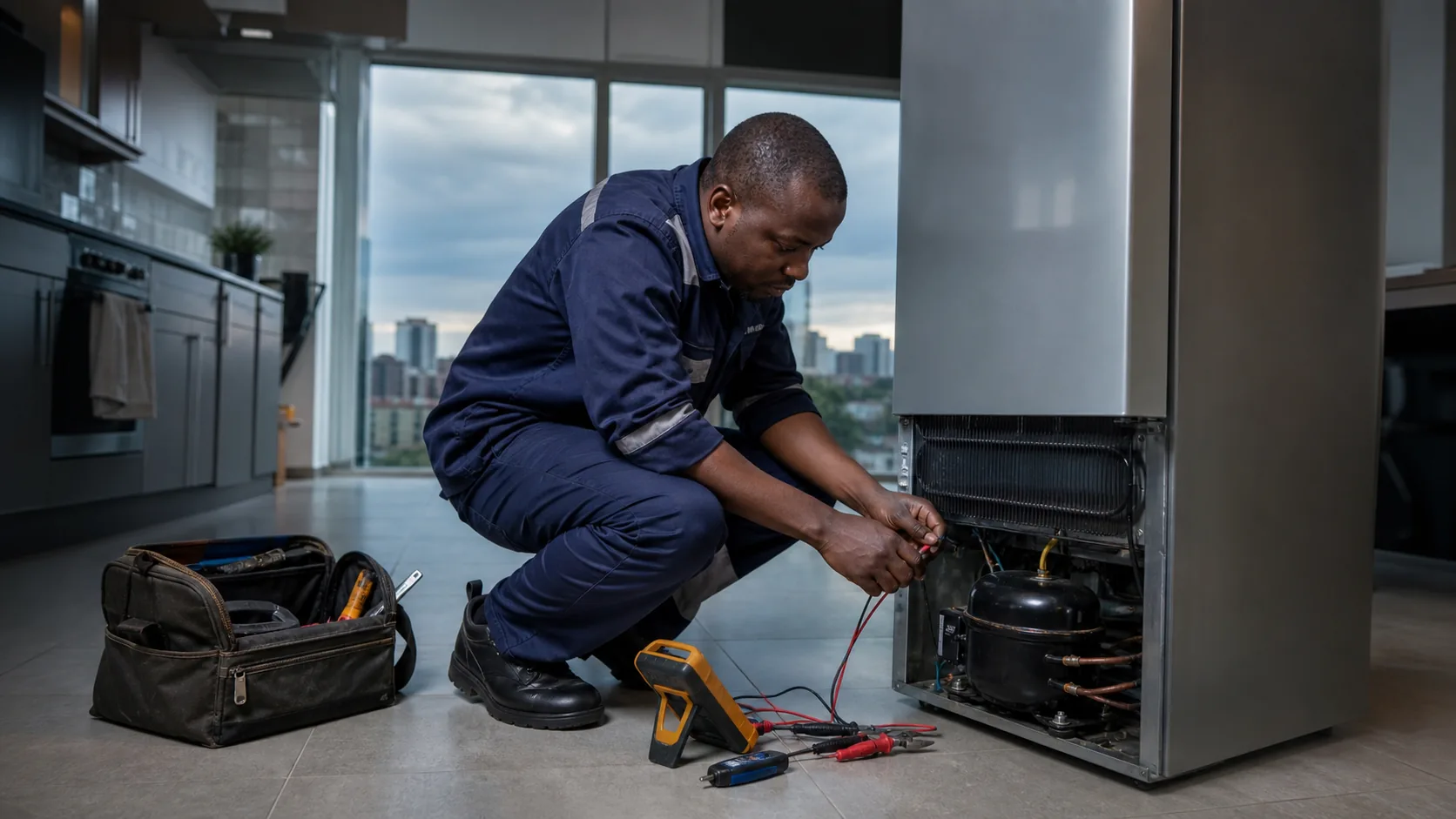
A fridge that runs but does not stay cold can put food, medicine and business stock at risk. The fault may be as simple as a blocked air vent or damaged door seal, but it may also involve the fan, thermostat, defrost system, compressor or refrigerant circuit. The safest response is to protect the contents first, make a few basic checks and arrange proper diagnosis if cooling does not recover.
M-Cool Electro Engineering Services Ltd provides fridge repair in Nairobi and supports domestic refrigerators, upright freezers, display chillers, under counter units and other commercial refrigeration systems. This guide explains what you can check safely, what common symptoms may mean and when the appliance needs a refrigeration technician.
Protect Food Before Troubleshooting
Use an appliance thermometer instead of judging temperature by touch. The United States Food and Drug Administration recommends keeping a refrigerator at 4 degrees Celsius or below and a freezer at minus 18 degrees Celsius. It also advises against crowding a fridge so tightly that cold air cannot circulate. You can review the FDA refrigerator temperature guidance for the underlying food safety advice.
During a power cut or cooling failure, keep the doors closed as much as possible. The FDA states that an unopened refrigerator can keep food cold for about four hours. Perishable food that has been above 4 degrees Celsius for four hours or more should be discarded. Do not taste food to decide whether it is safe. Move valuable stock to a working refrigerator or an insulated cooler with ice if the failure will continue.
Safe Checks You Can Make First
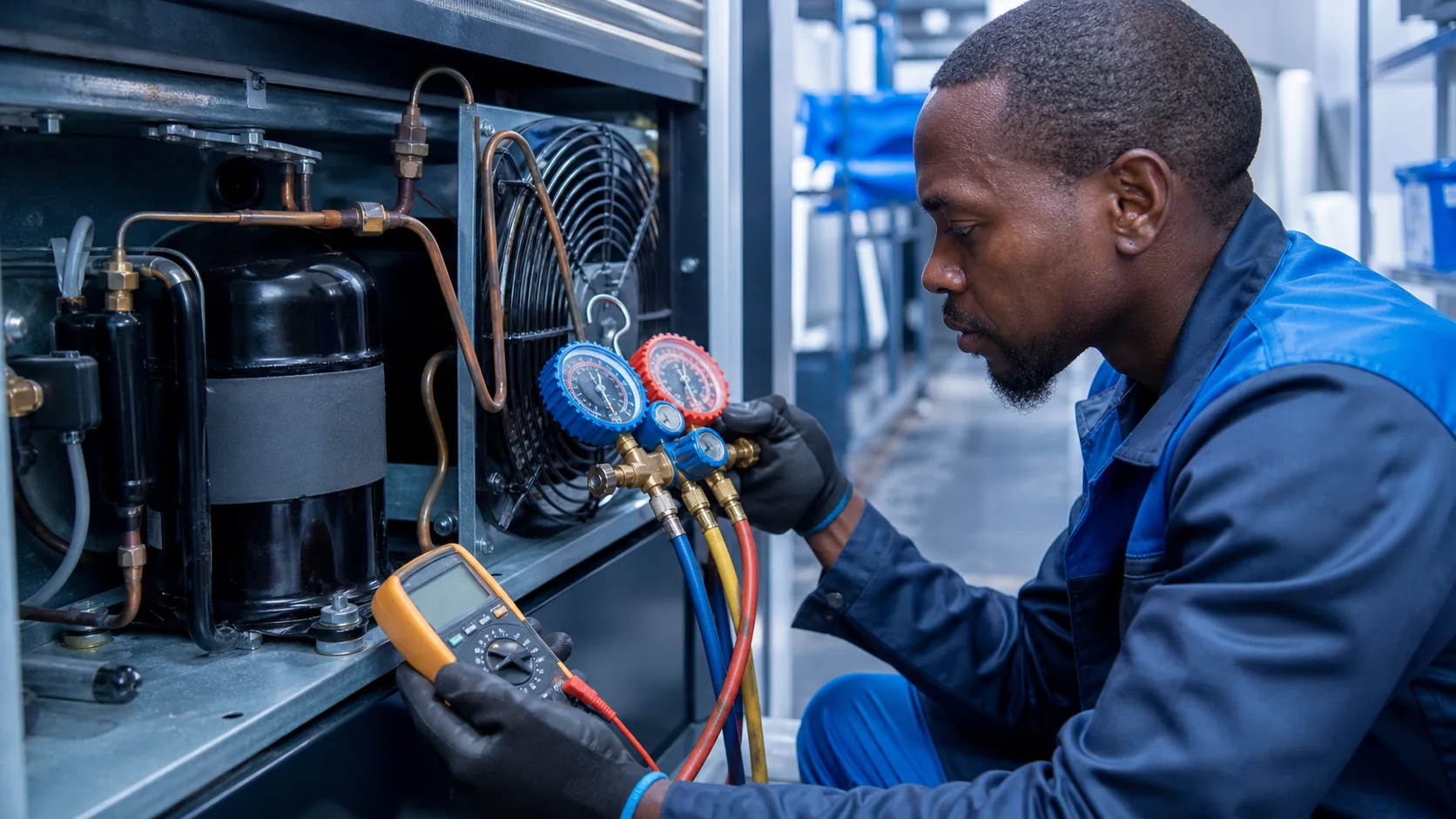
Confirm that the wall outlet has power and that the plug is secure. Check whether the interior light or display works, then inspect the temperature setting in case it was changed accidentally. After changing a setting, allow several hours for the cabinet temperature to stabilise and verify the result with a thermometer.
Make sure containers are not blocking the internal air vents. Leave room for cold air to move around the shelves, especially near the back wall. Inspect the door gasket for food residue, tears or sections that no longer grip the cabinet. A door that does not close fully lets warm, moist air enter and can cause long run times, condensation and frost.
Common Reasons a Fridge Stops Cooling
| What you notice | Possible cause | Useful next step |
|---|---|---|
| The light works but the fridge is warm | The control, fan, start device or compressor may not be operating correctly | Listen for fan and compressor operation, then arrange electrical and refrigeration diagnosis |
| The freezer is cold but the fridge section is warm | Cold air may not be reaching the fridge because of a blocked vent, failed fan, damper problem or heavy frost | Clear stored items away from vents and book service if airflow remains weak |
| Heavy frost covers the rear panel | The defrost heater, sensor, timer or control may have failed | Protect the food and have the defrost system tested |
| The motor runs for long periods | Dirty condenser surfaces, poor ventilation, a leaking door gasket, high room temperature or a sealed system fault may be increasing the load | Improve clearance, clean accessible dust safely and request diagnosis if temperatures remain high |
| Water collects inside or below the fridge | A drain may be blocked, a tray may be damaged or warm air may be creating excess condensation | Check for visible blockage without dismantling the appliance, then call for repair if leakage continues |
| Repeated clicking comes from the back | The compressor start device, supply voltage or compressor may be at fault | Switch the appliance off if it repeatedly tries and fails to start, then arrange testing |
Airflow, Dust and Door Seals
A refrigerator removes heat from inside the cabinet and releases it through the condenser. Dust on an accessible condenser and poor clearance around the appliance make heat rejection harder. Unplug the fridge before cleaning any exposed grille or accessible condenser surface, follow the manufacturer instructions and avoid bending tubing or removing electrical covers.
Door seals should be clean, flexible and continuous. Replace a gasket that is split, permanently distorted or no longer seals against the cabinet. Also check that the appliance is level enough for the door to close as designed. These basic conditions matter because a fridge cannot maintain stable temperature if warm room air enters every time the compressor stops.
Frost Does Not Always Mean More Cooling
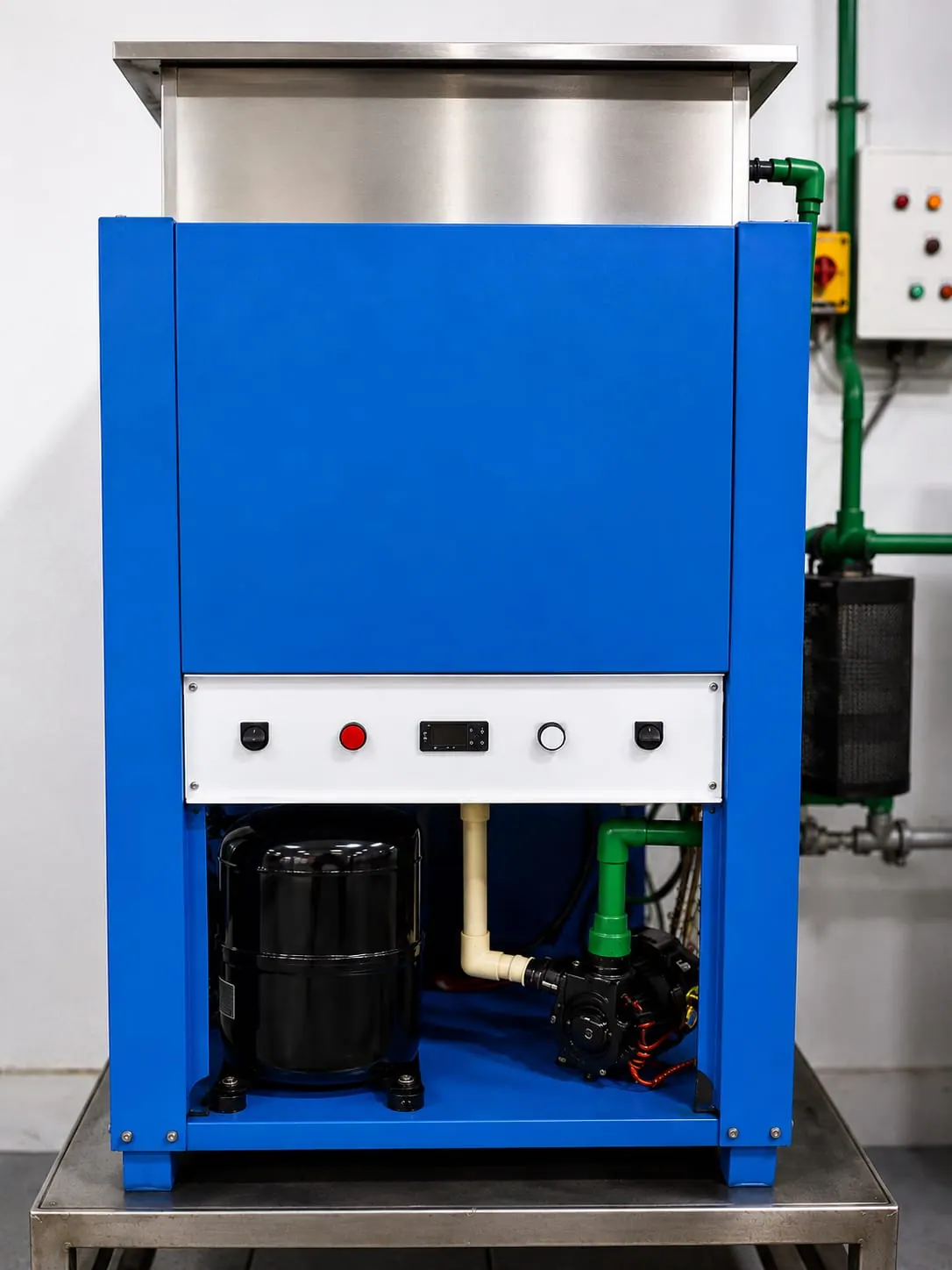
A thin frost pattern on an evaporator can be normal, but a solid layer of ice can block airflow and leave the fridge section warm. In frost free appliances, the defrost heater, sensor and control periodically remove accumulated frost. If one of those parts fails, ice can build up behind the internal panel even while the compressor continues to run.
Do not chip ice with a knife or screwdriver because the evaporator and refrigerant tubing can be punctured. A full manual defrost may temporarily restore airflow, but repeated frost means the underlying defrost or drainage fault still needs diagnosis.
Why Refrigerant Should Not Simply Be Topped Up
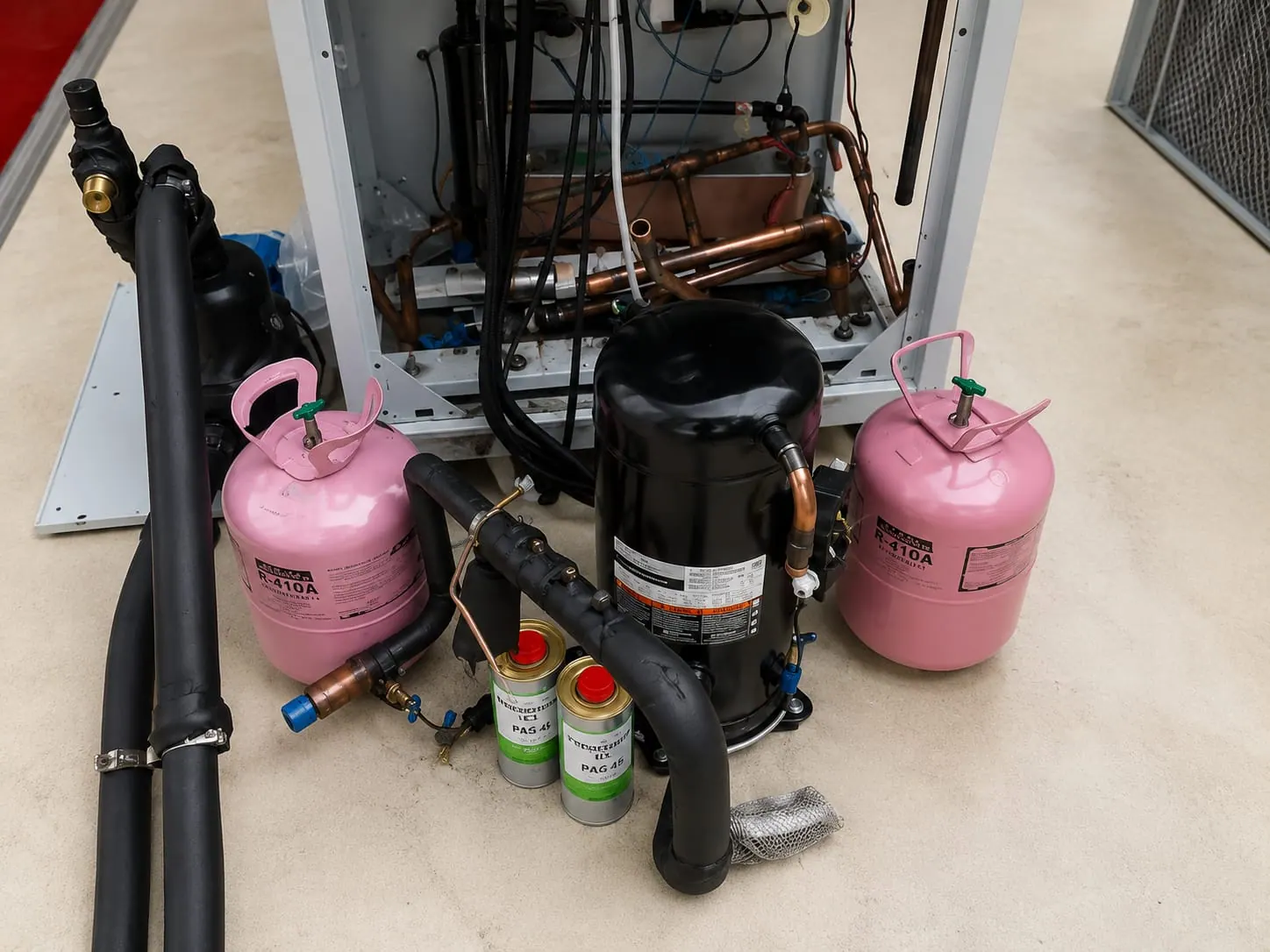
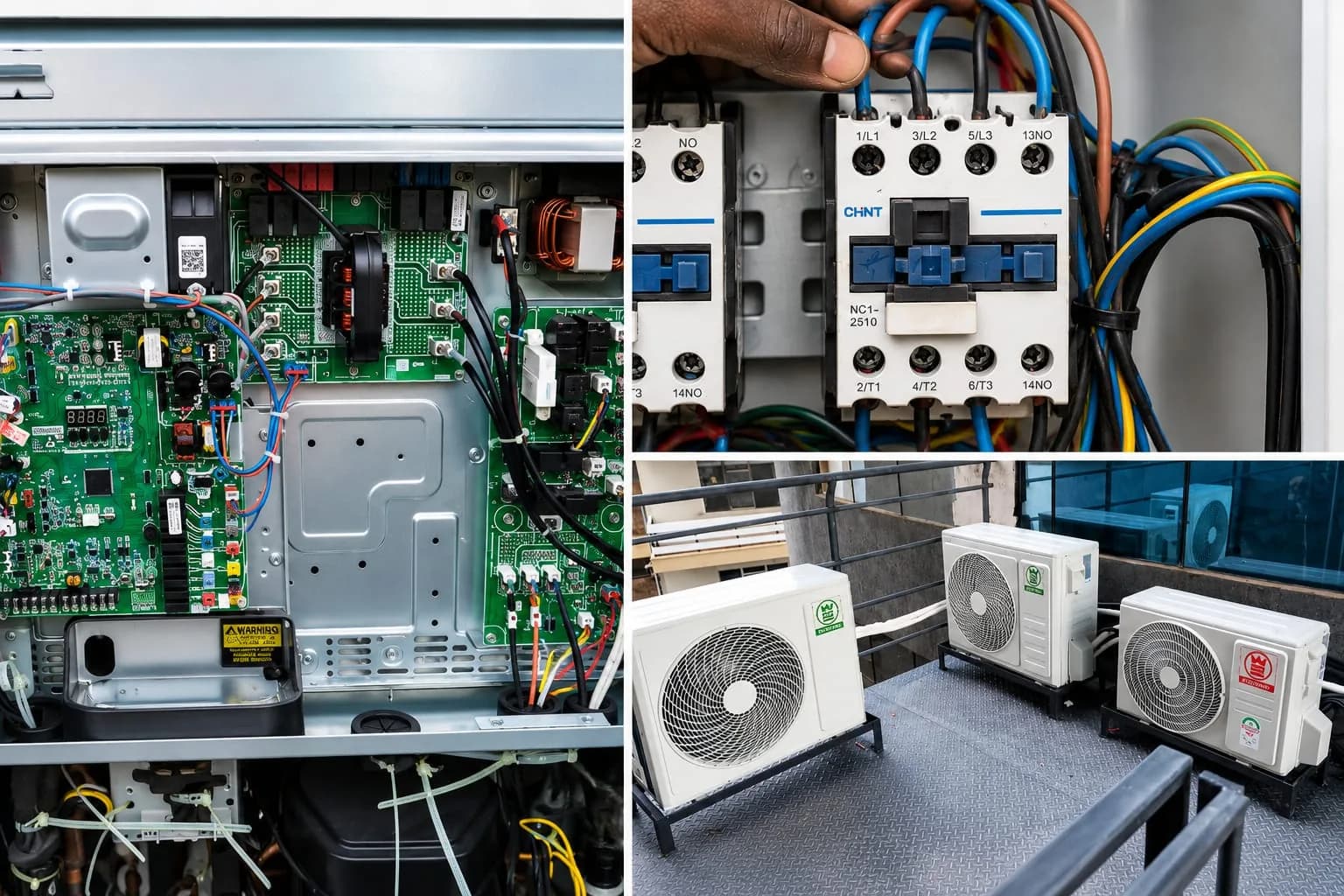
Refrigerant is not a consumable that a healthy sealed system uses up. A low charge normally points to leakage, an incomplete earlier repair or another sealed system problem. Adding refrigerant without finding the cause may give short lived cooling while leaving the fault unresolved.
Opening a refrigerant circuit requires suitable training, recovery equipment, pressure testing and knowledge of the refrigerant named on the appliance label. The United States Environmental Protection Agency technician guidance requires certification for work that could release refrigerant. Kenyan requirements differ, but the safety principle is the same: sealed system work belongs with a trained refrigeration technician, not a general electrical repair or a home refill kit.
How a Technician Diagnoses the Fault
A useful diagnosis starts with measured cabinet temperature and the customer description of when the problem began. The technician then checks supply voltage, controls, fans, airflow, door sealing, condenser condition, evaporator frost pattern, defrost parts and compressor starting. Refrigerant pressures and leak testing are considered only when the earlier checks point toward the sealed system.
This sequence matters because several faults produce the same symptom. A warm fridge does not automatically need gas, and a running compressor does not prove that the refrigerant charge is correct. Testing the whole cooling process helps avoid replacing parts by guesswork.
Repair or Replace the Fridge
Repair often makes sense when the cabinet and doors are sound, parts are available and the fault is limited to a fan, thermostat, sensor, start device, gasket or defrost component. Replacement may be more practical when the cabinet insulation is damaged, corrosion is extensive, several major parts have failed or the repair cost is too high for the age and condition of the appliance.
For restaurants, shops, hotels and other businesses, the decision should also consider stock risk and downtime. A service record showing temperature history, previous repairs and repeated alarms gives a better basis for that choice than appliance age alone.
Book Fridge Repair in Nairobi
We diagnose fridge and freezer faults for homes and businesses, explain the cause found and recommend repair or replacement based on the actual condition of the equipment. Our work covers temperature problems, electrical faults, fans, controls, door seals, defrost systems, compressors and refrigerant circuits.
If your fridge is warm, leaking, frosting heavily or repeatedly trying to start, contact M-Cool Electro Engineering Services Ltd. Tell us the appliance type, brand, model, symptoms and when the problem began so we can prepare for the service visit.