
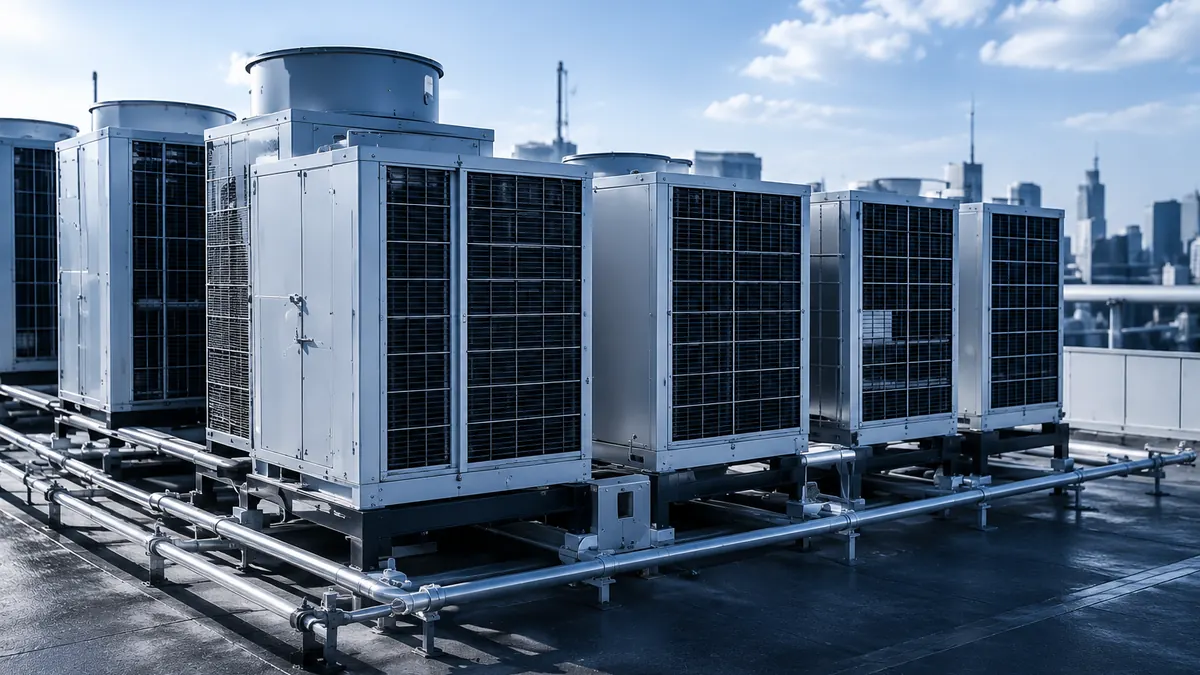
Cooling is becoming a bigger operating cost for commercial buildings, hotels, hospitals, offices, schools, retail spaces and industrial facilities in Kenya. As more businesses depend on air conditioning, mechanical ventilation and refrigeration, the smartest 2026 investment is not simply buying a larger unit. It is designing an efficient HVAC system that matches the building, daily usage and long-term maintenance plan.
The International Energy Agency has highlighted cooling as one of the fastest growing uses of electricity in buildings, with efficient air conditioning offering a major opportunity to reduce demand and operating costs. For Kenyan facilities, that message is practical: the right system can improve comfort, protect equipment, reduce downtime and lower monthly power bills.
Why Energy Efficiency Matters in 2026
Many HVAC problems start before installation. A system may be oversized, undersized, poorly positioned or installed without enough attention to airflow, insulation, drainage and service access. The result is usually familiar: uneven cooling, high electricity use, water leakage, noise, frequent repairs and rooms that never feel comfortable.
Energy-efficient HVAC planning looks at the complete system. It considers the indoor units, outdoor units, refrigerant pipework, ducting, controls, ventilation paths, fresh air requirements, occupancy, heat-generating equipment and maintenance schedule. When these parts work together, the system uses less energy to deliver stable comfort.
What Businesses Should Check Before Buying HVAC Equipment
Before choosing a brand or capacity, start with a site assessment. A professional engineer should inspect the building layout, ceiling height, room orientation, number of users, windows, insulation, heat from appliances, operating hours and future expansion plans.
- Confirm the correct cooling capacity for each room or zone.
- Check whether a split AC, VRF or VRV system, packaged unit, chiller or ducted system is the best fit.
- Review power supply, drainage routes, mounting points and service access.
- Plan fresh air, exhaust air and filtration where indoor air quality matters.
- Compare energy efficiency, warranty, spare parts availability and after-sales support.
Where VRF and VRV Systems Make Sense
Variable refrigerant flow systems are useful for buildings with many rooms or zones, especially where different areas have different cooling demands. Offices, hotels, clinics, learning institutions and mixed-use buildings can benefit from better control and reduced energy waste when the system is designed correctly.
However, VRF and VRV systems still need careful engineering. Pipe distances, refrigerant charge, controls, indoor unit placement and commissioning must be handled properly. A premium system installed poorly will not deliver premium performance.
Ventilation and Indoor Air Quality
Comfort is not only about temperature. Good HVAC design also supports indoor air quality by managing fresh air, stale air, odors, humidity and filtration. Hospitals, offices, restaurants, schools, washrooms and commercial kitchens often need mechanical ventilation alongside air conditioning.
In 2026, businesses should treat ventilation as part of the main system design rather than an afterthought. Proper airflow helps protect staff, customers, patients, products and sensitive equipment.
Maintenance Is Part of Energy Efficiency
Even a well-designed HVAC system can become inefficient if it is not maintained. Dirty filters, blocked coils, loose electrical connections, refrigerant leaks, poor drainage and faulty controls force equipment to work harder. This increases power consumption and shortens system life.
A good maintenance plan includes filter cleaning or replacement, coil cleaning, drain checks, refrigerant checks, electrical inspection, fan inspection, thermostat calibration, airflow testing and performance records. For commercial clients, planned maintenance is often cheaper than emergency repairs and lost business hours.
How M-Cool Electro Helps
M-Cool Electro Engineering Services Ltd helps businesses in Nairobi and across Kenya design, install and maintain HVAC systems that fit real operating conditions. Our team supports commercial HVAC systems, air conditioning installation, VRF and VRV systems, mechanical ventilation, ducting, cold rooms, refrigeration and preventive maintenance.
If you are planning a new project or upgrading an old system in 2026, start with a proper assessment. The right HVAC decision should reduce energy waste, improve comfort, simplify maintenance and support your business for years.